Over time, bathroom tiles can become grimy and streaked with hard water stains — not the look you want for your bathroom. The good news is that there are some right techniques that you can use to bring back their shininess and cleanness. Here’s how to clean bathroom tiles and remove hard water stains.
Understanding Hard Water Stains
Hard water stains are mineral deposits left after high concentrations of calcium and magnesium in water evaporate. These stains manifest as milky patches or white deposits on tiles, and they can be challenging to eliminate without the right method.
Gather Your Cleaning Supplies
First, you will need to gather supplies:
- White Vinegar: A natural cleaner that cuts through mineral buildup.
- Baking soda: a gentle abrasive that scrubs off stains.
- Lemon Juice: Another natural acid that helps dissolve hard water stains.
- Tile Cleaner Suitable for Commercial Use: Select a cleaner designed specifically for tile surfaces.
- Soft Brush: Soft-bristled brushes will help you deep clean your tiles without scratching the surface.
- Microfiber Cloths: Good for things like wiping and drying tiles without lint.
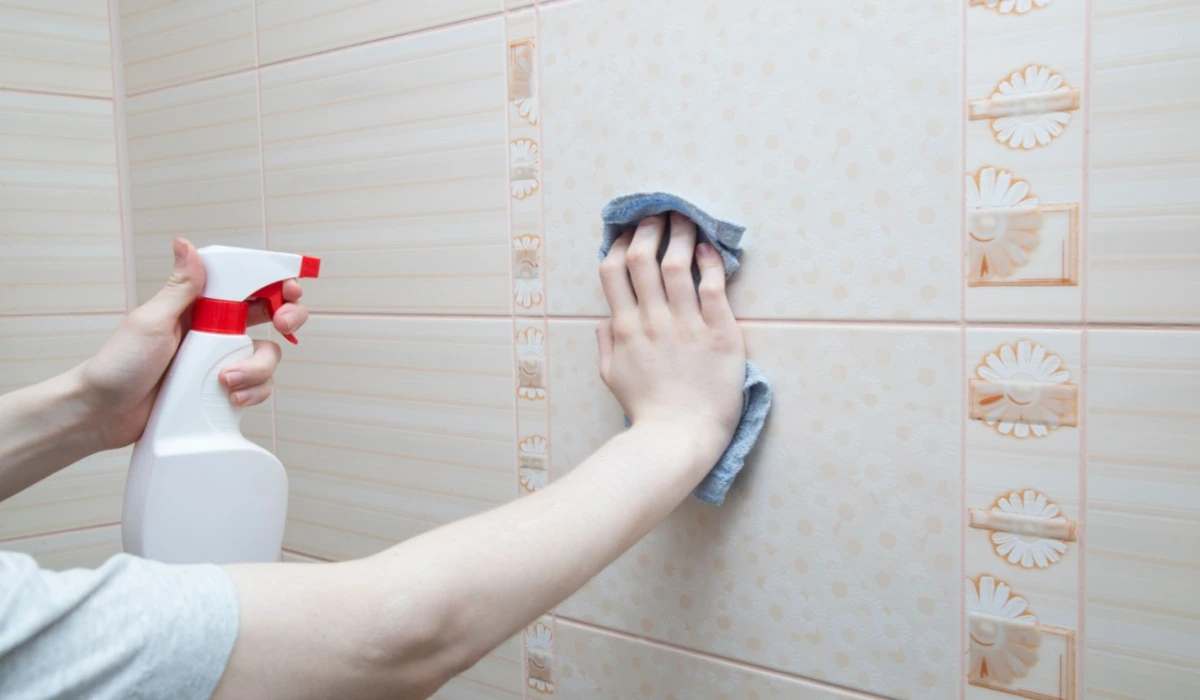
- Cleaning Solution Spray Bottle: Use To Spray Cleaning Solutions
Regular Maintenance Tips
Keep on top of maintenance to avoid buildup:
- Daily wipe down: Wipe the tiles dry after showering with a squeegee or microfiber cloth to help keep mineral deposits from forming.
- Weekly cleaning: Add tile cleaning to your weekly checklist of chores to easily get rid of soap scum and grime.
DIY Natural Cleaning Methods
These do-it-yourself solutions can be very powerful, if you’re looking for more earth friendly options:
Vinegar and Baking Soda Paste
- Formation: To form a paste, combine equal parts of white vinegar and baking soda.
- Application: Spread the paste onto stained areas and leave for 15 minutes.
- Scrub: Using a soft-bristles brush, scrub the tiles, paying extra attention to the stained spots.
- Rinse: Rinse with warm water, then dry with a microfiber towel.
Lemon Juice Spray
- Preparation: Put lemon juice in a spray bottle.
- Spritz: Apply a good amount of lemon juice to the stains.
- Wait: Allow it to sit for 10 minutes, which will dissolve the mineral deposits.
- Wipe: Wipe the surface with a damp cloth, then dry the tiles well.
Using Commercial Cleaners
If natural solutions fall short, commercial products can help:
- Pick with Care: A cleaner specifically made to remove mineral deposits and is safe for tiles.
- Read and Follow Instructions: Packaging instructions are there for a reason—follow them closely.
- Ventilation: The bathroom should be well ventilated during chemical cleaner use to avoid inhaling harmful chemicals.
Professional Cleaning Techniques
To clean even deeper, try these pro tips:
Steam Cleaning
Equipment: Rent or buy a steam cleaner, if necessary.
- Method: Use steam to loosen grime and buildup, so that it can be wiped away.
- Safety: Adhere to equipment instructions, and use heat-resistant surfaces.
Grout Cleaning
- Target groutline: For stains between tiles, use a grout brush and commercial-grade grout cleaner.
- Sealer Application: To prevent future stains, apply a grout sealer after cleaning.
Preventative Measures
Adopt these practices to avoid future staining:
- Water Softener: If you live in an area with hard water, a water softener can help to reduce the hardness and protect your skin from dryness.
- Frequent Drying: Encourage your members to dry the tiles after they’re done to avoid any build up.
- Seal Tiles: Use a tile sealant periodically to protect against moisture.
Conclusion
The right approach can make cleaning bathroom tiles and tackling those hard water stains a breeze. By considering both natural and commercial solutions, adding regular maintenance with powered cleaning services and professional techniques when needed, you can keep your bathroom tiles in tip top shape. And don’t forget preventative methods to prevent stains from building up in the future and help keep your bathroom looking clean and inviting.